



 |
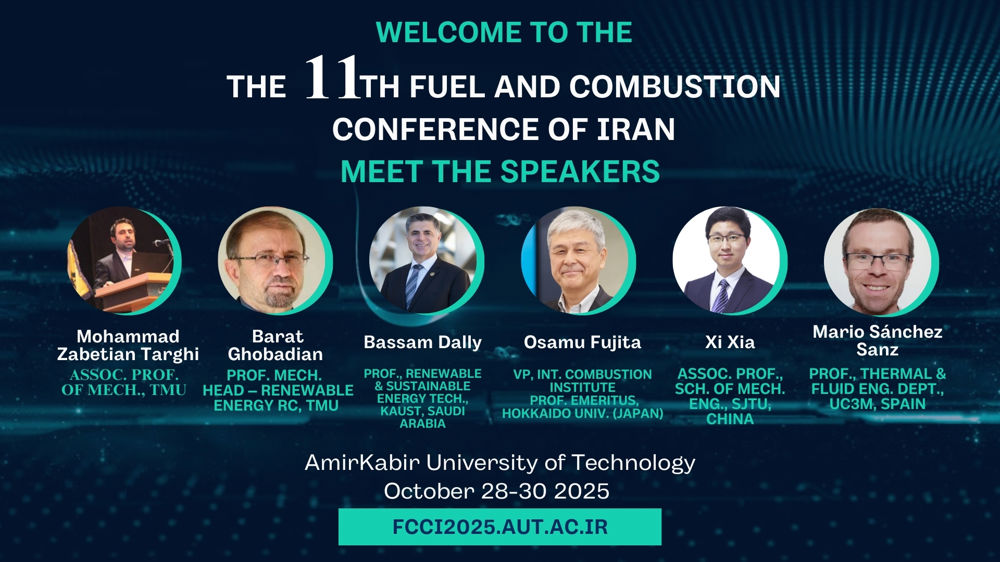
Osamu Fujita Vice-President of International Combustion Institute Professor Emeritus at Mechanical and Aerospace Engineering Hokkaido University, Japan
|
Title:
Research on solid material flammability in microgravity
Abstract:
Combustion phenomena are accompanied by rapid heat release, resulting in large temperature and density gradients. Consequently, combustion is always influenced by buoyancy-induced flow under normal gravity, which complicates understanding the elementary processes involved in combustion. To overcome this challenge, a microgravity environment is a powerful tool for gaining better insights into combustion phenomena, and many research activities have utilized microgravity in this field. In this Keynote lecture, general information about methods for microgravity combustion research will be introduced, including the drop-tower in Hokkaido, Japan, constructed in 2006, and the Solid Combustion Experimental Module (SCEM), currently in operation onboard the ISS/KIBO module in orbit. Furthermore, the essential role of microgravity in combustion research will be discussed from both scientific and practical perspectives.
One of the ongoing projects is the FLARE (Flammability Limits at Reduced Gravity Experiment) project, in which the author’s group is involved to study flame spread and ignition phenomena of electric wires. The recent results, including modeling flame spread over electric wires and numerical simulations of overloaded wire ignition, will be presented as examples of the contributions microgravity research.
Biography:
Dr. Osamu Fujita is a Professor Emeritus of Mechanical and Aerospace Engineering at Hokkaido University. He is involved in research related to Microgravity Combustion, Fire Science, Flame Dynamics of premixed flame, Carbon neutral combustion. He received his B.S. (1982), M.S. (1984) and Ph.D. (1987) from Hokkaido University. He was a visiting professor at University of California at Berkeley (1994). Dr.Fujita has authored over 200 reviewed papers in the area of combustion and microgravity science. He served as a president of the Combustion Society of Japan (2017-2019), a president of Japan Society of Microgravity Application (2017-2021), a vice-president of Japan Society of Mechanical Engineers (2019-2020). He is now serving as a vice president of the Combustion Institute (CI, 2020-2028) and Program Co-Chair (2024-2026) of the 41st International Combustion Symposium. He is a recipient of Best Paper Awards of JASMA (2006, 2018) and JSME (2007) and of distinguished paper award of 39th International Combustion Symposium.
|
|
Professor Bassam Dally Renewable and Sustainable Energy Technology KAUST, Saudi Arabia
|

Title:
Innovative Technology for Ammonia and Hydrogen Adoption to Industry
Abstract:
As the world moves to a Circular Carbon Economy mode, fuels such as hydrogen and ammonia have been suggested as viable alternatives to fossil-based fuels. Intense research efforts are underway to adopt those fuels to the many industrial systems that are currently operated on hydrocarbon fuels. The heavy industry is responsible for a third of CO2 emission and most of the emission comes from generating thermal energy rather than power. Also, most of this thermal energy is at high temperature or involve reduction processes that are deemed hard to abate. This seminar will focus on research activities to develop innovative technologies that utilizes hydrogen and ammonia and can be adapted to heavy industry. Examples of current research efforts, findings and further development will also be presented and discussed.
Biography:
Bassam Dally is a Professor of Mechanical Engineering, at King Abdullah University of Science and Technology, KAUST, Saudi Arabia. Over the last 34 years, Prof Dally work was focused on a variety of research topics related to energy conversion, decarbonization and technology development. He has expertise, in mineral processing, combustion, renewable energy, hybrids and alternative fuels production and utilization. Besides his well-cited scholarly work, including ~400 peer reviewed papers in leading scientific journals and conferences, Prof Dally has also authored 17 industry reports, named on 3 patents and managed industrial projects worth more than $10m. Prof Dally has also established and currently leads an industry-government-KAUST consortium, Future Cement Initiative (FCI) in Saudi Arabia. This initiative aims to ensure sustainable production of cement into the future, through advanced research, development and deployment of innovative solutions that are in synergy with Vision2030 and future decarbonization plans. Previous positions include, head of mechanical engineering, deputy director of the centre for energy technology (University of Adelaide) and stream co-lead in the KAUST circular carbon initiative. Prof Dally is also the president of Saudi Arabian Section of the Combustion Institute He won many awards over the years, including ‘Energy Professional of the Year in South Australia’, and recently was awarded a Fellowship of the Combustion Institute.
|
Barat Ghobadian Professor of Mechanical Engineering Head of the Renewable Energy Research Center, Tarbiat Modares University
|
|
Title:
The Role of Technology and Biofuels in Reducing Evaporative Losses and Increasing Combustion Efficiency
Abstract
In different countries around the world, scientists are working to achieve clean and affordable energy, which is one of the goals of sustainable development. These efforts are focused on technologies to reduce fuel evaporation and develop biofuels because continued extraction and consumption of oil resources will face shortages and severe environmental problems in the not-so-distant future. On the one hand, it is predicted that humanity will rely on these fuels to supply part of its energy needs at least until 2050, and Iran is no exception to this rule, with its vast oil and gas resources. On the other hand, although the existence of abundant oil and gas resources has reduced attention to the development of biofuels, Iran is also forced to move towards the development of these fuels in order to protect the environment and contribute to the existing imbalance. Therefore, in this article, first, fuel evaporation reduction technologies will be discussed and examples of such technologies will be introduced, and then the latest achievements in Iran and the world regarding biofuels and advanced blended fuels will be discussed. Technologies for reducing evaporation and increasing combustion efficiency include both advanced equipment and the development of technologically advanced enzymes. Today, the use of fossil fuels has formed an integral part of human daily life. Scientists have achieved new solutions and technologies to deal with fuel evaporation reduction and anti-explosion in order to meet the needs of environmental protection, economy, and environmental conservation, and have introduced new products to increase the combustion efficiency of existing fossil fuels, which are unknown in Iran. The invention of technological products such as eXess and Exmile are considered to be such technologies whose performance is something like a miracle. Also, alternative biofuels and advanced emerging fuels have been developed, some of which were known to man in the distant past and are currently being used. Biofuels such as Bioethanol, Biomethanol, Biodiesel and Biogas are known and are used in some countries. Currently, research is being conducted in many countries to commercialize emerging fuels. These fuels will become popular in many countries in the near future, depending on the state of resources and technology. However, due to the high investment and production costs, the use of these fuels has not yet been commercialized. It is predicted that in the future, with the development of production technology and the reduction of the cost price of these types of fuels, their use will increase. Fuels such as BTL, CTL, P-series, Biobutanol, Diesterol, Diesohol, Gasohol and Bio-nano are among the advanced biofuels that have been developed in Iran and the world.
Biography:
He received his Ph.D. in Mechanical Engineering from the Indian Institute of Technology Roorkee (IIT Roorkee) and is currently a Full Professor (Academic Rank 46). He was recognized as the Distinguished Researcher of Iran in 2015 and has been ranked among the top 1% of scientists worldwide according to Thomson Reuters ISI (2015–2024), with an H-index of 78 (Google Scholar) and 67 (Scopus). He has also been listed as a Highly Cited Researcher by the Essential Science Indicators (ESI) database (2020–2024).
In recognition of his contributions, he was honored as the Outstanding Scientific Figure of Iran in Renewable Energy (3rd Iranian Renewable Energy Award, 2020) and as the National Exemplary Professor in 2025. He is the founder and director of the Bioenergy Research Center and the Renewable Energy Research Institute at Tarbiat Modares University.
His academic output includes over 750 scientific publications, comprising around 300 international journal papers, 100 national journal papers, 150 international conference papers, and 220 national conference papers. He has also authored six books and translated one book in the fields of mechanical engineering, industry, and energy.
As a supervisor and mentor, he has guided more than 230 MSc, Ph.D., and postdoctoral researchers, including 35 Ph.D. dissertations as the main advisor, over 100 MSc theses, 40 Ph.D. dissertations as co-advisor, and 5 postdoctoral projects. He has also served as an advisor for more than 50 MSc theses.
His professional achievements further include the design and execution of 40 national-level technical projects in industry, energy, and environment, as well as 60 patents (56 domestic and 4 U.S. patents). He is currently the Editor-in-Chief of the Iranian Journal of Engine Research and serves on the editorial board of 10 national and international scientific journals. He is also an active member of five scientific and professional societies.
|
|
Mario Sánchez Sanz Professor of Thermal and Fluid Engineering Department Carlos III University, Madrid, Spain
|

Title:
Exploring the survival of premixed hydrogen flames below the lean flammability limit
Abstract:
Ultra-lean hydrogen flames, which can ignite unintentionally due to leaks near a heat or power source, pose significant safety risks. This study investigates why flames propagate at equivalence ratios below the theoretical flammability limit (φl = 0.255), where the equilibrium temperature equals the crossover temperature. To find the answer, we use detailed chemistry to study the conditions that explain recent experimental observations of flame propagation in confined channels at equivalence ratios φ < 0.2.
Our research considers a two-dimensional geometry of two parallel plates separated by a small distance to form a straight channel. Adiabatic and isothermal boundary conditions are considered at the walls to evaluate the effect of heat losses on the survival of the flame. The flame curvature, caused by the confinement within the narrow channel, leads to the formation of a high-temperature region near the center of the channel. This region is surrounded by unburned gas flowing close to the channel walls. The reaction is then sustained by the hydrogen that diffuses from the low-temperature region to the reactive front. This behavior is unique to fuels or fuel blends with sufficiently high mass diffusivity and does not occur when the Lewis number is near or above unity. A new scaling, that accounts for the flame curvature to define the characteristic velocity and lengths scales, is proposed to describe the flame dynamics at equivalence ratios near the flammability limit.
According to our research, self-sustained 2D hydrogen flames may exist at equivalence ratios as low as φ = 0.15, a threshold determined by the existence of a stationary flat flame that is unaffected by heat losses.
Our findings reveal that imposing adiabatic or isothermal boundary conditions on the walls plays only a secondary role in flame survival. The propagation velocity and flame shape are shown to be largely independent of heat losses. Instead, hydrogen’s high mass diffusivity becomes the primary driver, inducing a significant flame curvature that creates a high-temperature region locally enriched by the rapid diffusion of hydrogen from the cold mixture towards the reactive front. Furthermore, this work introduces new characteristic velocity and length scales, specifically tailored for ultra-lean equivalence ratios, where planar flames cannot exist.
Biography:
Mario Sánchez Sanz obtained his doctorate in May 2007 in the Mathematical Engineering program at Carlos III University, funded by a competitive FPI fellowship and supervised by Antonio Sánchez and Amable Liñán.
After graduating in May 2007, he moved to the School of Aeronautics at the Polytechnic University of Madrid (UPM) with a postdoctoral contract "Juan de la Cierva". In November 2007, he secured a position as an assistant professor at UPM, which he left in September 2011 to join the Fluid Mechanics Department at Carlos III University as a visiting professor, becoming an associate professor in June 2012. In December 2021, he became full professor of Fluid Mechanics.
He was awarded the "José Castillejo" postdoctoral fellowship twice (2008 and 2010) for research stays abroad, which he used to initiate research collaborations with the Mechanical Engineering Departments of Yale University and the University of California, Berkeley. In 2024, he obtained a Salvador de Madariaga/Fulbright fellowship to conduct research at the University of California, San Diego.
Mario's research interest focuses on the application of asymptotic, numerical, and experimental techniques to study reactive and non-reactive flows. This broad description includes problems of heat and mass transfer, jets analysis, combustion of carbon-free fuels (ammonia, hydrogen and biofuels) and bi-phasic flows.
|
Associate Professor Xi Xia School of Mechanical Engineering Shanghai Jiao Tong University, China
|
|

Title:
Dynamics of vortices in unsteady combustion
Abstract:
The emergence of vortices in fluid is usually a manifestation of hydrodynamic instability. In combustion, the reacting flow is also susceptible to various types of instabilities, which may give rise to vortex formation. The subsequent vortex-flame interactions can strongly influence the flame structures and dynamical features and pose serious challenges to combustion stability. This motivated us to study the dynamics of vortices in unsteady combustion by focusing on two fundamental questions: 1) how does flame influence the formation and behaviors of vortices and 2) how do vortices affect the flame dynamics? In this work, we employed time-resolved laser diagnostics to simultaneously capture the evolutions of coherent vortical and flame structures. I will demonstrate how such diagnostics and analysis can help advance our understanding of vortex and flame dynamics in unsteady combustion, through several examples of jet diffusion flames and premixed swirling flames.
Biography:
Xi Xia is an Associate Professor at Shanghai Jiao Tong University (SJTU). He obtained his Ph.D. from the University of Florida in 2016. His research revolves around vortex dynamics and aerodynamics for unsteady problems of both non-reacting and reacting flows. Dr. Xia has published more than 50 research articles in the leading journals of the area, including PNAS, Journal of Fluid Mechanics, Combustion and Flame, Proc. Combust. Inst., etc. Since 2023, he has delieved over 10 invited/keynote lectures in academic conferences on topics related to vortex-flame interaction. As the Principle Investigator, he was funded by more than 10 research projects, including 4 from the National Natural Science Foundation of China (NSFC). He received the ‘Young Investigator’ Award in the 12th Asia-Pacific Conference on Combustion (ASPACC 2019), and was a member of the Program Committee of the Chinese National Combustion Symposium (2022-2024).
|
Mohammad Zabetian Targhi |
|
Title:
Performance Characterization of Industrial Burners and Furnaces
Abstract
Characterization of the performance and pollutant emissions of industrial burners and furnaces is of key importance in combustion systems. This topic is significant for both existing combustion systems and new ones. These goals include research and development of technology, providing solutions for industrial performance issues, and verifying the correct operation of combustion systems, as well as improving performance indicators such as fuel consumption, pollutants, capacity, and production quality. This lecture will focus on methods for characterizing and evaluating combustion systems on a laboratory scale. In this regard, scaling methods and their associated challenges will be presented. The scope and accuracy of these methods will then be discussed by presenting the results of combustion simulations. In the second part of the presentation, characteristic parameters for evaluating the performance of furnaces and burners will be introduced, and a method for integrating these parameters into performance maps for burners and furnaces will be explained. The final section of the presentation will cover examples of research conducted on evaluating the performance of combustion systems in MILD combustion furnaces, thermal burners, and industrial combustion units. It seems that developing methods for characterizing combustion systems can lead to providing practical solutions for improving the performance of industrial units related to combustion. Therefore, focusing on technical knowledge and implementation on a laboratory scale and then on an industrial scale can be considered a key priority for the country's scientific and industrial center.
Biography:
Mohammad Zobatian received his Ph.D. in Mechanical Engineering from Sharif University of Technology and is currently an Associate Professor at the School of Mechanical Engineering, Tarbiat Modares University. He is the head of the National Combustion Laboratory and serves as the Vice-President of the Iranian Combustion Society. His research focuses on industrial combustion, particularly thermal burners for water heating and cooking applications, as well as industrial furnaces for steel heating. These efforts have led to the publication of high-quality journal articles and the execution of several research projects in collaboration with industry. He has been actively involved in organizing meetings of the Iranian Combustion Society and has continuously contributed to the society’s outreach and promotional activities.
Abstract Submission Deadline
2025-08-29Paper Acceptance Notification
2025-09-05Conference Start Date
2025-10-28Conference End Date
2025-10-30